





1. Scope
This guideline applies to the emergency response, inspection, and restoration of production after accidental water ingress into the electrical control cabinets (hereinafter referred to as "electrical cabinets") supplied with the rotomolding equipment manufactured by our company. This document is intended for the operation and maintenance personnel of the equipment user; inspection and repair work shall be carried out by qualified electrical professionals.
2. Safety Precautions
2.1 After water ingress into the electrical cabinet, it is strictly forbidden to close the switch and energize the cabinet before drainage, drying, and testing are completed.
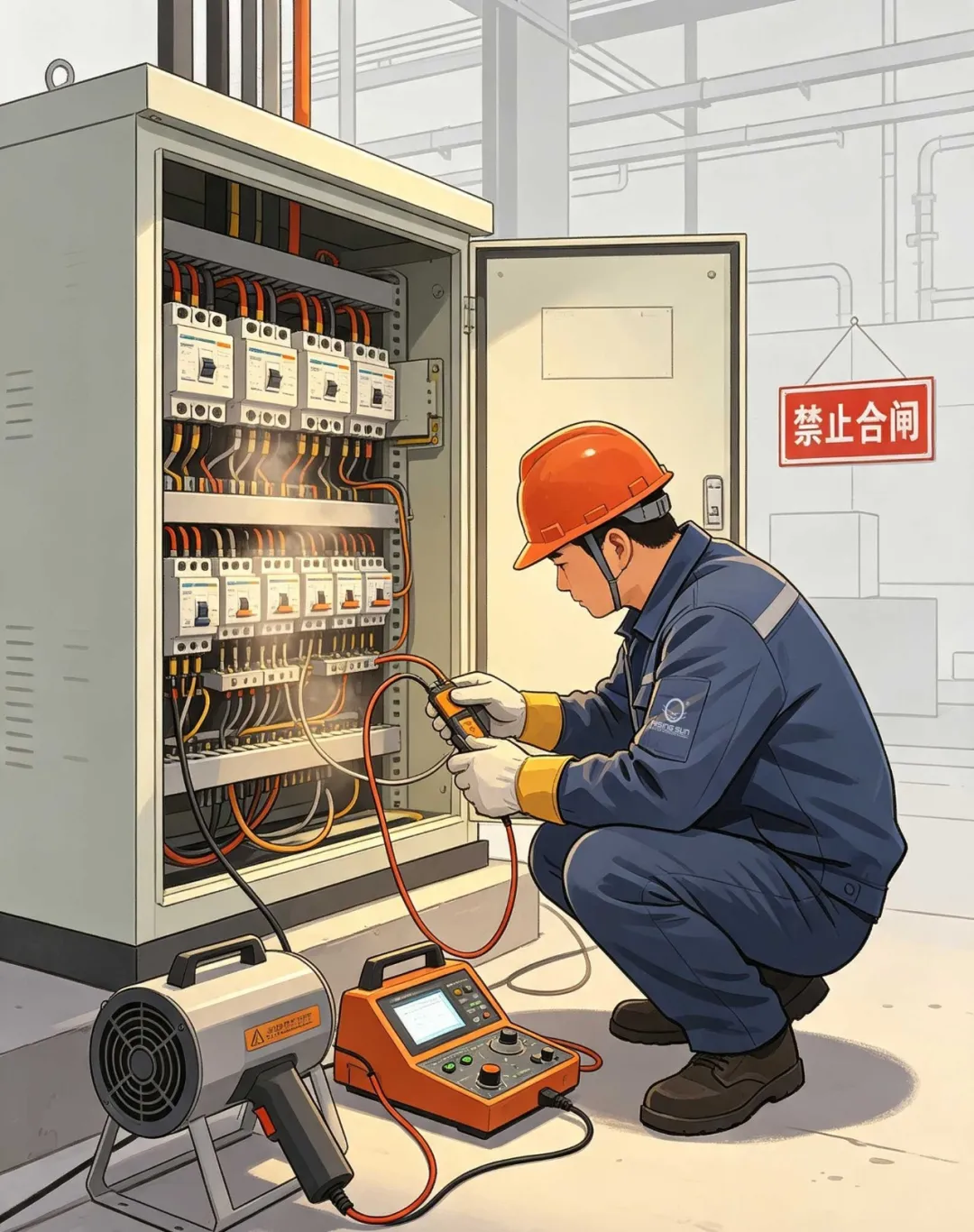
2.2 Before inspection, it must be confirmed that the electrical cabinet is completely de-energized, and a "Do Not Close, Men at Work" warning sign shall be hung at the upstream distribution point.
2.3 Inspection and testing shall be performed by licensed electricians in compliance with relevant electrical safety regulations.
2.4 Do not energize before drying and insulation testing have passed.
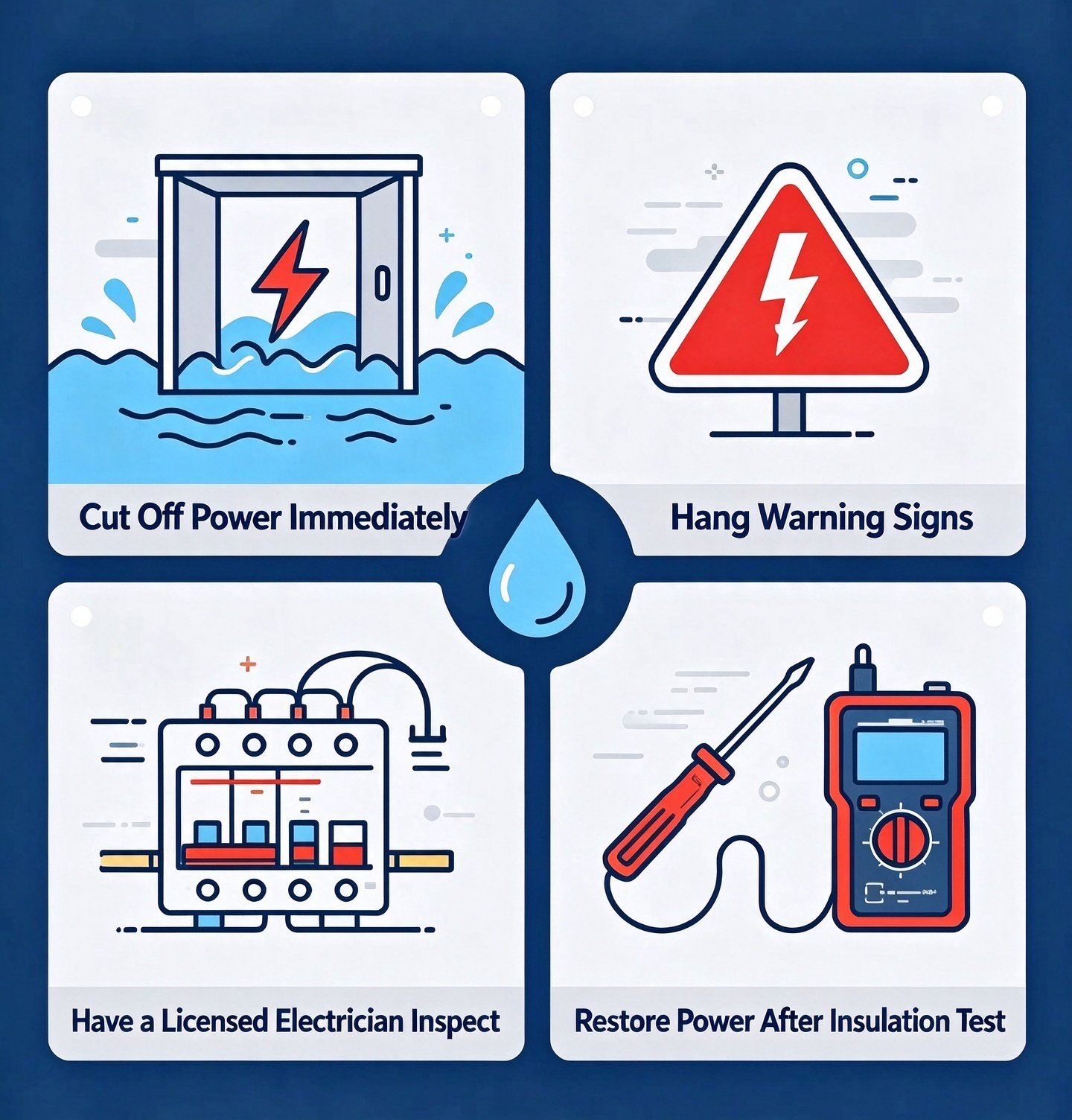
2.5 After water ingress, cut off the power immediately to prevent short circuits, electric shock, and component damage.
3. Emergency Response
3.1 Immediately switch off the main power circuit breaker of the electrical cabinet; if there is significant water accumulation inside the cabinet, also switch off the upstream distribution switch.
3.2 Hang a "Do Not Close" warning sign at the power switch and assign dedicated personnel to keep watch.
3.3 Drain the accumulated water inside the cabinet and remove silt and other foreign matter.
4. Inspection Procedure
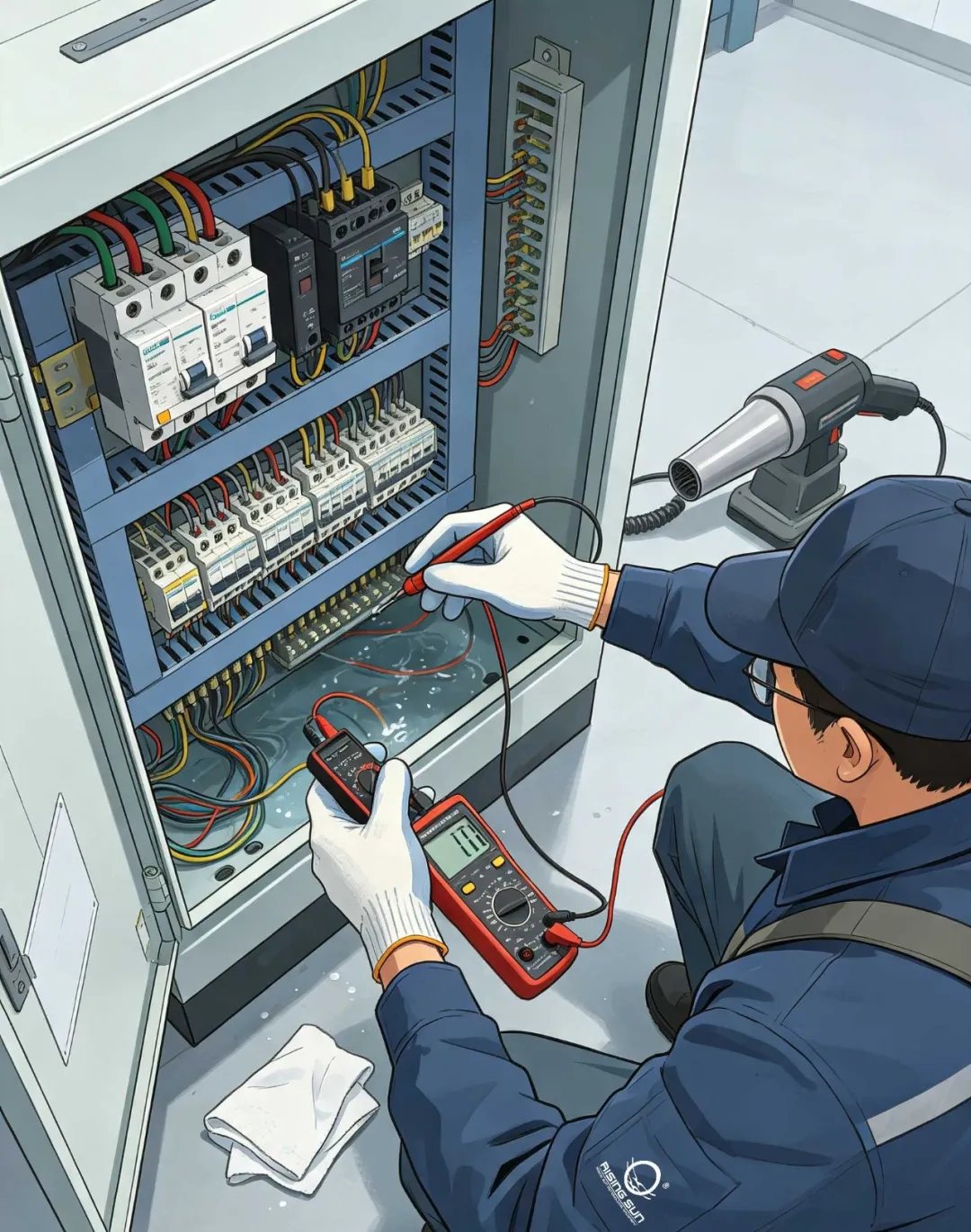
4.1 Power-off isolation: Confirm that both the main circuit and the control circuit of the electrical cabinet are de-energized, and verify the absence of voltage with a voltage tester pen or a multimeter.
4.2 Drainage and cleaning: Remove accumulated water, silt, and water stains from the cabinet; remove damp filter cotton, sealing strips, etc., and dry or replace them.
4.3 Drying:
(a)Natural air drying: Open the cabinet door and leave it in a ventilated place to dry for no less than 24 hours;
(b)Forced drying: Dry hot air or dehumidifying equipment may be used; the hot air temperature shall not exceed 50°C to prevent damage to electronic components.
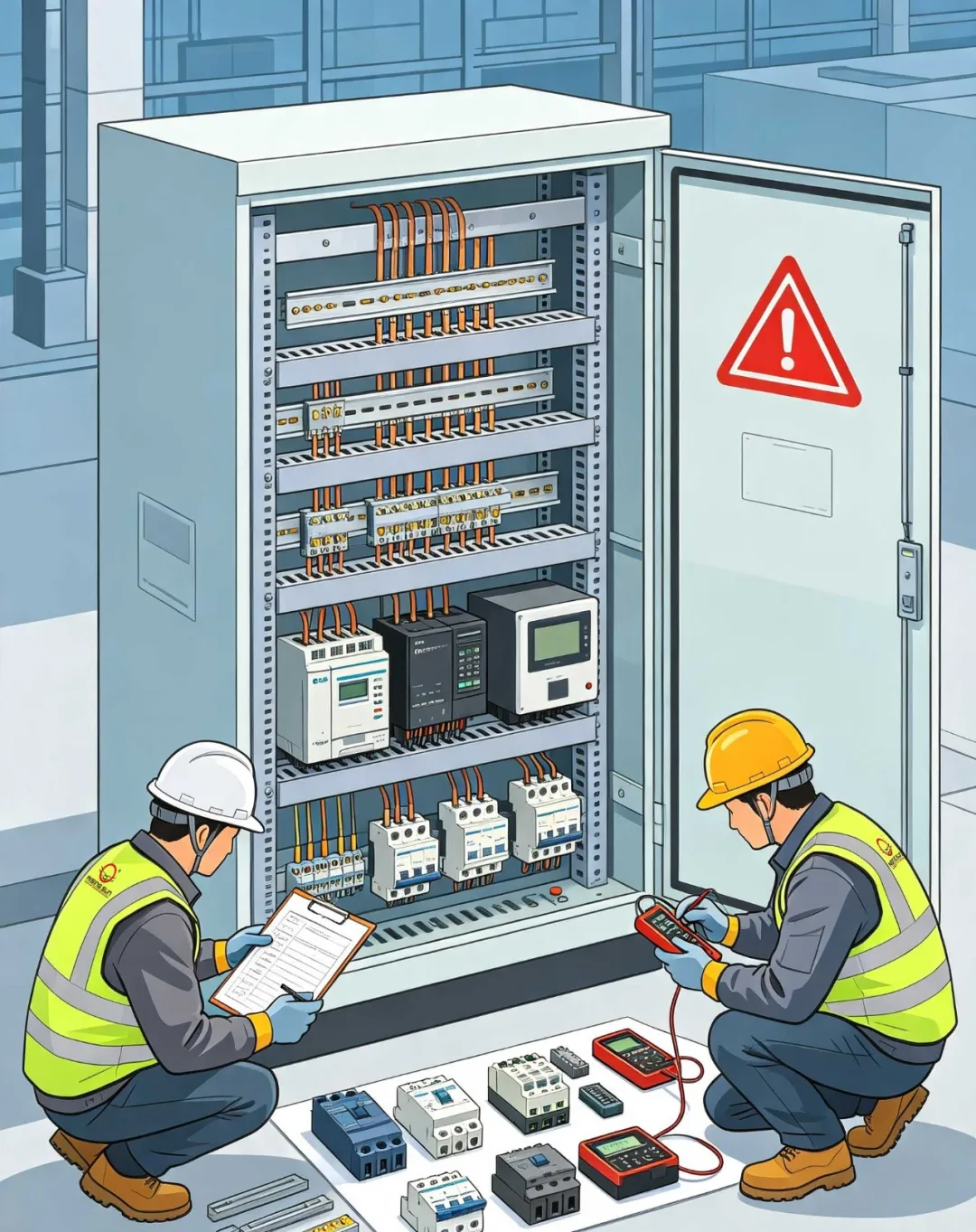
4.4 Component inspection: Check circuit breakers, contactors, relays, frequency inverters, PLC, touch screens, switching power supplies, solid-state relays, terminal blocks, etc. one by one for water stains, corrosion, and burn marks.
4.5 Component classification and handling:
(a)Reusable after drying: metal structural parts, copper busbars, terminal blocks, etc.;
(b)Replacement recommended: precision electronic components such as PLC, frequency inverters, touch screens, and switching power supplies may retain moisture inside after water ingress, which may cause short circuits; hidden risks remain even after drying;
(c)Case-by-case handling: contactors, relays, circuit breakers, etc. may be dried and then tested when slightly damp; they shall be replaced in case of severe water ingress or corrosion.
4.6 Insulation test: Use a 500V megohmmeter to measure the insulation resistance of the main circuit to ground and of the control circuit to ground respectively; neither shall be less than 1MΩ; circuits that fail the test shall be further dried or the cause shall be identified.
4.7 Step-by-step energization: After confirming that the insulation is qualified, first energize the control circuit and observe whether the PLC, touch screen, etc. start normally; after confirming everything is correct, energize the main circuit.
4.8 Trial run: Carry out a no-load trial run, gradually apply the load, and observe whether each circuit and each component operates normally.
5. Confirmation Before Resuming Production
5.1 The insulation resistance test has passed.
5.2 All components have been inspected and replaced as required, with no abnormalities.
5.3 No-load and loaded trial runs are normal.
5.4 Production may only be resumed after all the above items are confirmed to be correct.
6. Preventive Measures
6.1 The electrical cabinet shall be installed in a dry, ventilated location away from water sources; the bottom of the cabinet shall be properly raised to prevent water seepage from the ground.
6.2 Regularly check whether the sealing strips of the electrical cabinet and the seals of cable entry and exit holes are intact, and replace them if necessary.
6.3 Cable entry and exit holes, cable glands, and other parts shall be properly sealed against water.
6.4 Do not compromise the protection rating (IP rating) of the electrical cabinet; rain covers shall be installed for outdoor or washdown environments.
6.5 Regularly clean dust accumulation inside the electrical cabinet and check for signs of moisture or condensation.
Email: info@risingsunroto.com
Website: www.risingsunroto.com




 浙公网安备 33108102000897号