





In the rotomolding process chain, the heating and sintering stage is often regarded as the technical centerpiece — powder melting, bubble elimination, and melt homogenization, with every step critical to molding success. However, the value of the cooling stage has long been underestimated. Most factories reduce it to a passive waiting game of "let it cool down." Operators decide when to open the mould by feel alone, and air-cooling and water-cooling switches are run full-tilt based purely on experience. This rough-and-ready approach masks an important fact: the cooling process has a far greater impact on the final performance of the product than most people realize — affecting the part’s rigidity and toughness, dimensional stability, degree of warpage, and even service life.
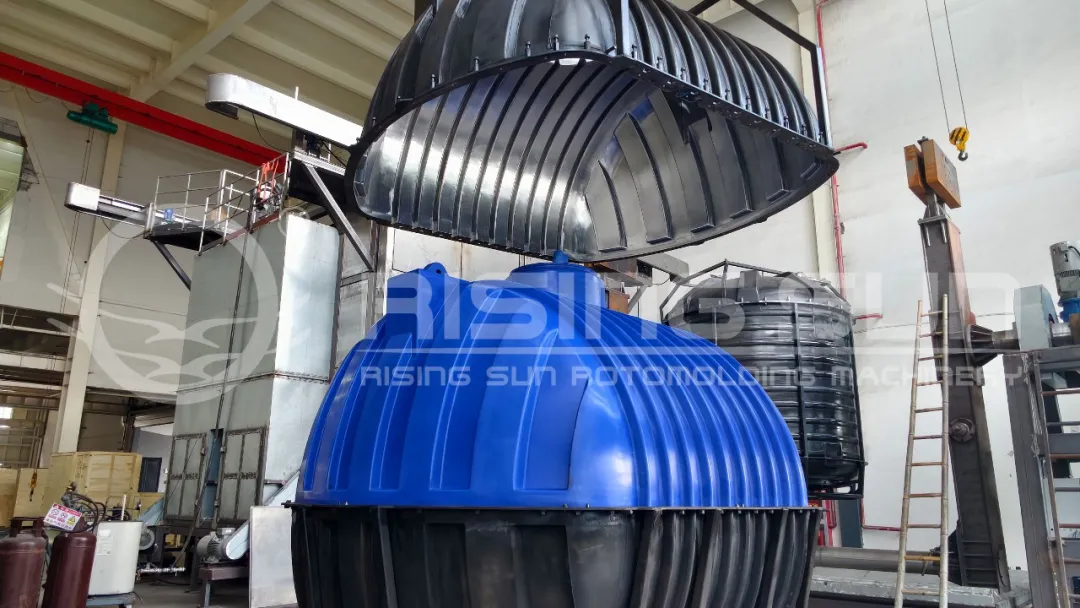
As rotomolded products evolve toward larger sizes, higher precision, and better performance, the once-overlooked cooling process has become the key variable for controlling product yield rates and ensuring consistent performance. Today, drawing on hands-on operational experience, we provide a comprehensive breakdown of the underlying logic of rotomolding cooling, the various cooling methods, stage-by-stage control essentials, and practical pitfall avoidance tips.
I. Cooling Is More Than Just Temperature Reduction — It Is the Critical Stage for Locking In Product Performance
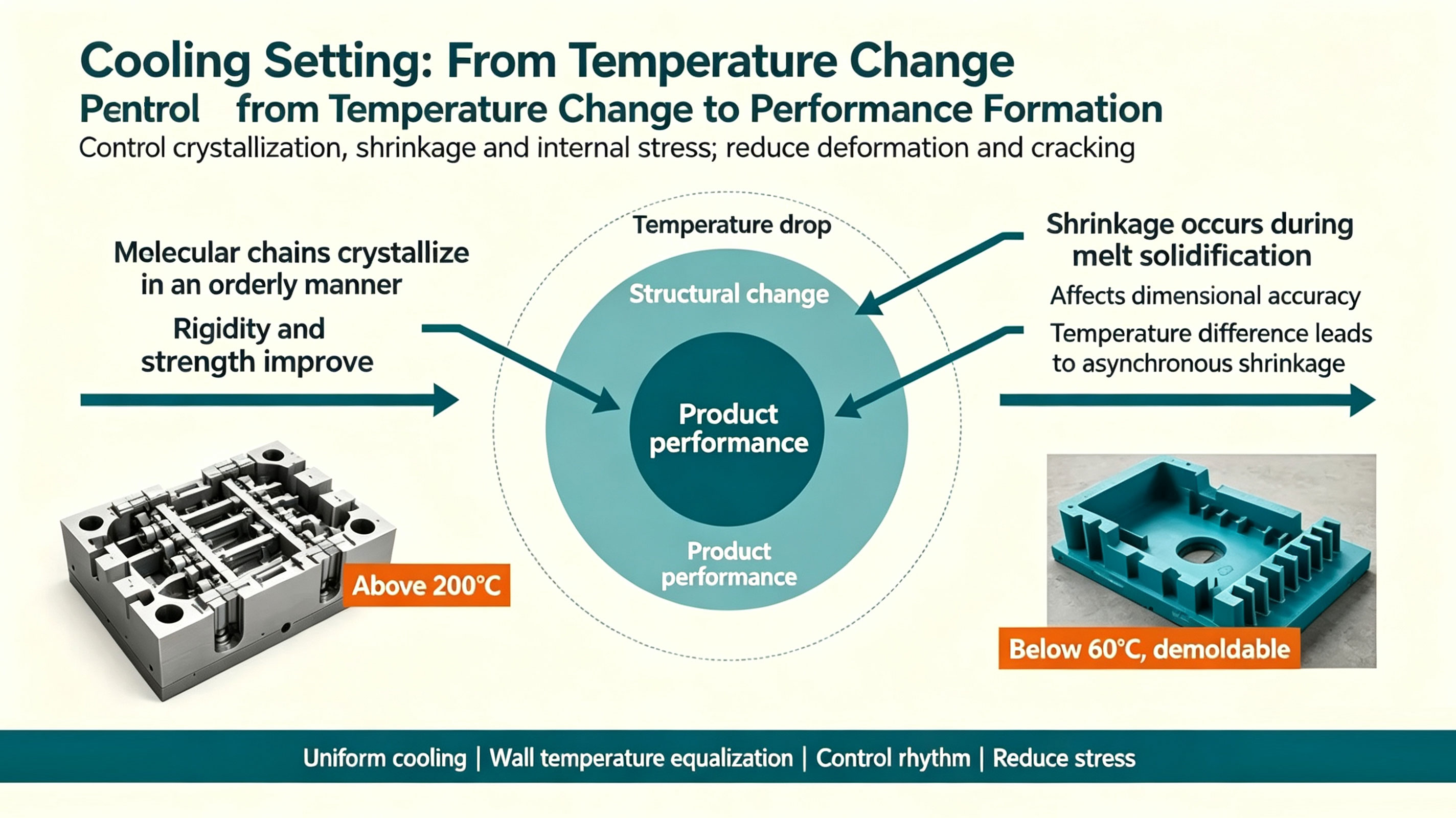
After the mould is removed from the heating oven, the internal plastic melt temperature is typically above 180℃, and must be cooled below 70℃ before demoulding. Throughout the cooling process, a series of microstructural changes occur within the polymer that directly lock in the product’s final performance. These changes span three key dimensions:
1. Molecular chains arrange and crystallize in an orderly fashion, definitively setting the part’s core mechanical properties such as rigidity and strength;
2. The melt-to-solid transition causes volumetric shrinkage, and the cooling pace directly determines whether shrinkage is uniform, affecting the product’s dimensional accuracy;
3. Temperature differences cause asynchronous shrinkage, generating internal stresses that become "frozen" inside the part, creating hidden risks of warpage and cracking.
Micro-Level Core: Spherulite Structure — What Sets the Upper Limit of Product Performance
During cooling, tiny spherulite particles form inside the plastic. The size, density, and distribution of these spherulites are the root cause of quality differences when the same raw material and the same mould are used with different cooling processes. Slow cooling produces large spherulites, with wide gaps between crystals where stress tends to concentrate, making the product highly prone to cracking under impact. Fast cooling produces small, evenly distributed spherulites that interlock with each other, significantly boosting the material’s toughness and stability.
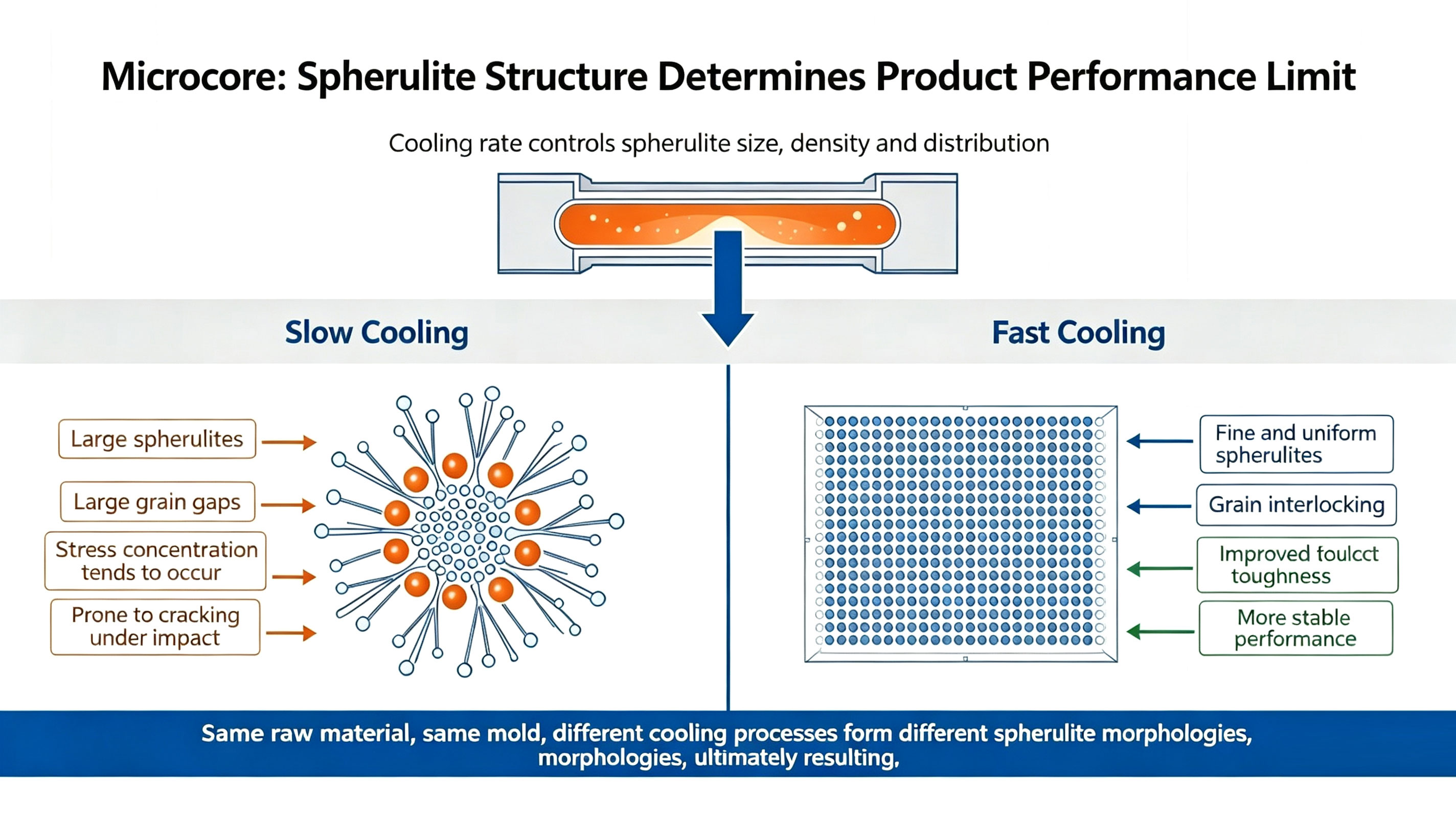
Due to the formation patterns of spherulites, the cooling rate and product performance share an inverse trade-off relationship — there are no universal standard parameters. The process must be matched to the product’s intended use case.
If the heating stage is like "cooking the raw material through," then the cooling stage is what "sets the final texture and quality." With the same raw material, the same mould, and the same heating parameters, differences in the cooling process alone can produce the stark contrast between an acceptable part and a rejected one.
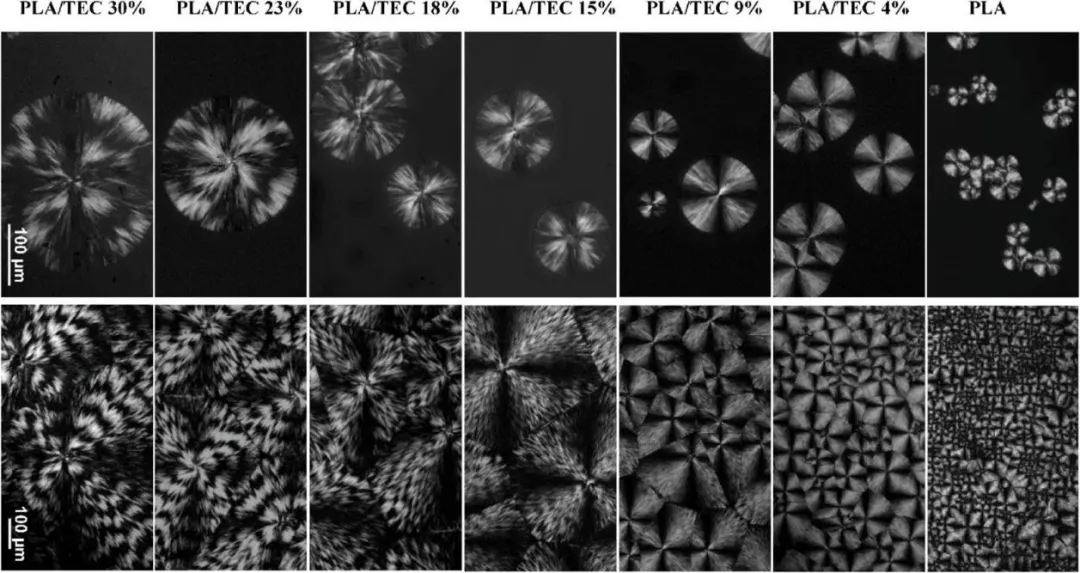
Microscopic morphology of polymer spherulites. Image source: ResearchGate
II. Four Mainstream Cooling Methods: Characteristics, Pros & Cons, and Application Scenarios
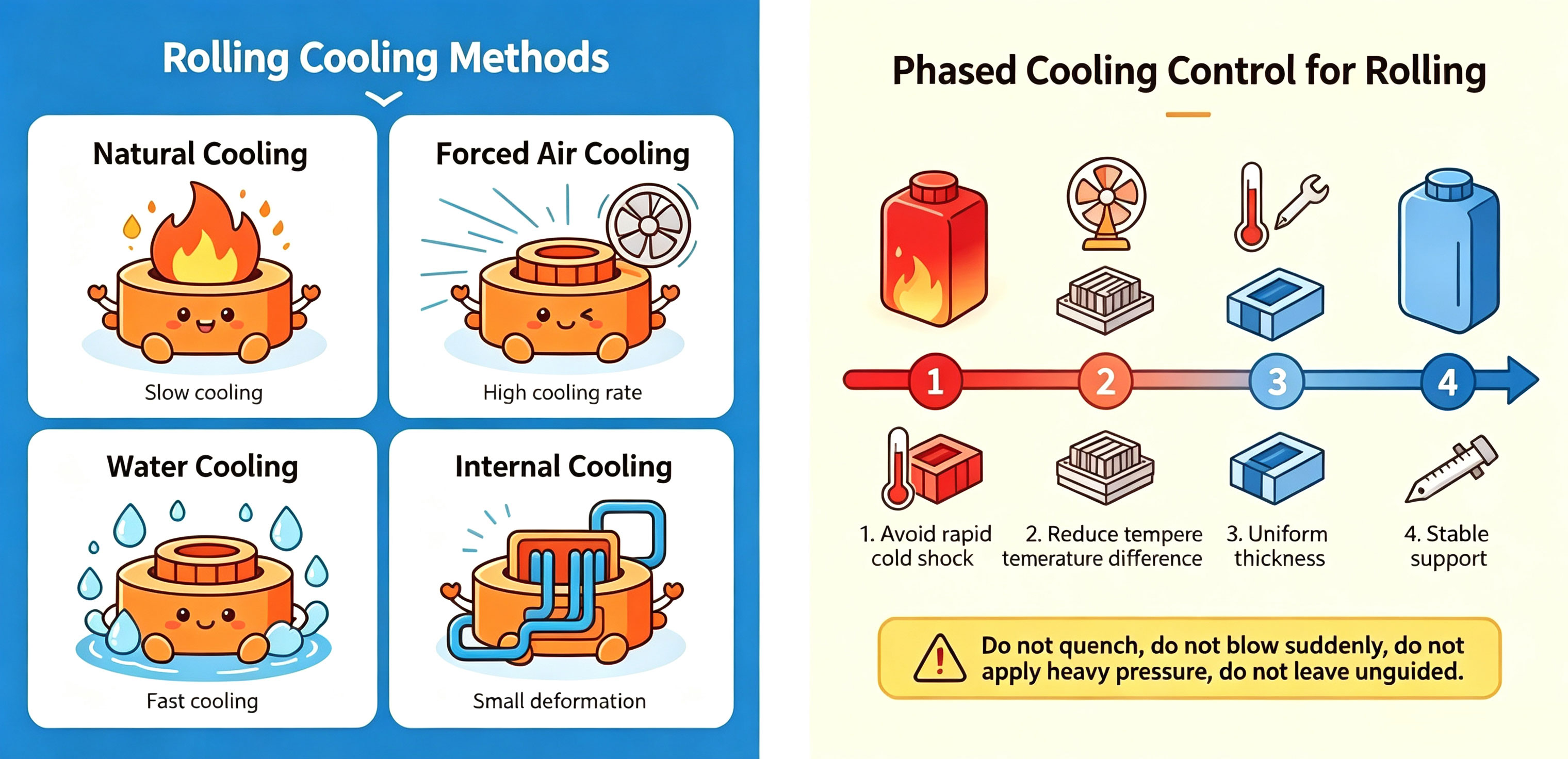
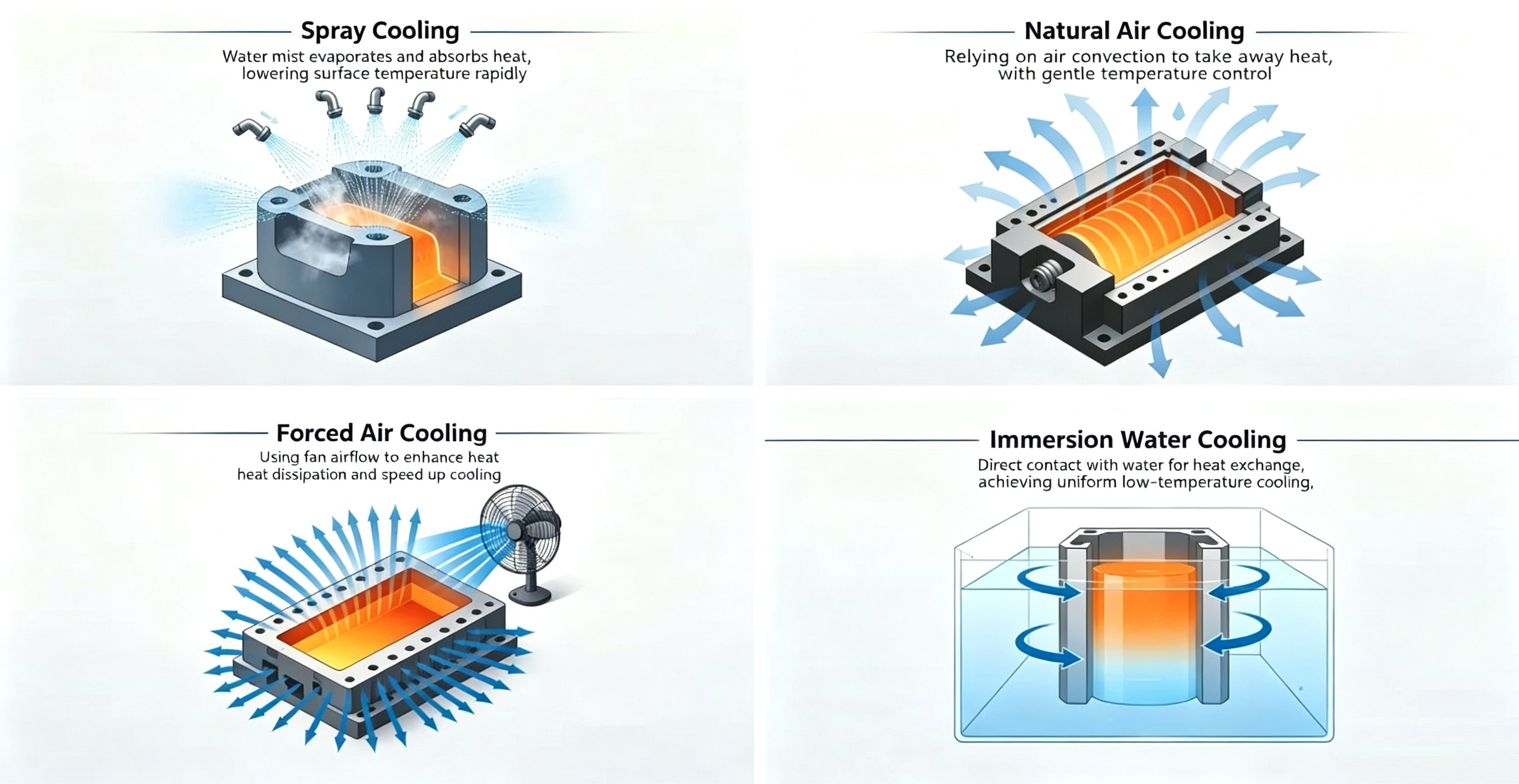
The rotomolding industry currently uses four common cooling methods — natural air cooling, forced air cooling, spray cooling, and immersion water cooling. Each method differs significantly in cooling efficiency, product quality outcome, and suitable applications. The right choice depends on specific production needs:
1. Natural Air Cooling
No equipment is needed — the mould is simply left to cool on its own. The key advantage is uniform temperature across the entire mould, minimal thermal stress, and virtually no risk of warpage, providing the best possible dimensional accuracy. The main drawback is the long cooling cycle and low production throughput. This method is best suited for high-precision, thin-walled, small-batch custom rotomolded products.
2. Forced Air Cooling
The most widely used cooling method in the industry, using fans to blow air for accelerated cooling — far more efficient than natural cooling. The key practical challenge lies in air delivery uniformity: blowing air from a single direction can create a temperature difference of 20-30℃ between the windward and leeward sides of the mould, directly causing product warpage. The recommended optimization is to position fans at multiple angles, or reduce the mould rotation speed during the initial cooling phase, to ensure uniform air exposure on all surfaces of the product.
3. Spray Cooling
Water mist is sprayed onto the mould, using evaporation to rapidly carry away heat — more efficient than forced air cooling. The main drawback is the tendency to create localized cold spots: uneven water mist deposition can cause local mould temperature differences of up to 20-30℃, creating structural weak points in the product. The industry best practice is to use a pulsed spray mode — intermittent cooling to avoid sudden temperature drops and minimize overall temperature variation.
4. Immersion Water Cooling
The mould is fully submerged in water for cooling — the fastest of the four methods. However, it has very limited applicability. On one hand, the extreme temperature differential causes the inner and outer surfaces of the product to shrink asynchronously, trapping large amounts of residual stress inside the material. On the other hand, water splash can reach the rotation mechanism, accelerating corrosion. This method is only suitable for ultra-high-volume, thin-walled standard parts and is not recommended for the vast majority of rotomolded product manufacturing.
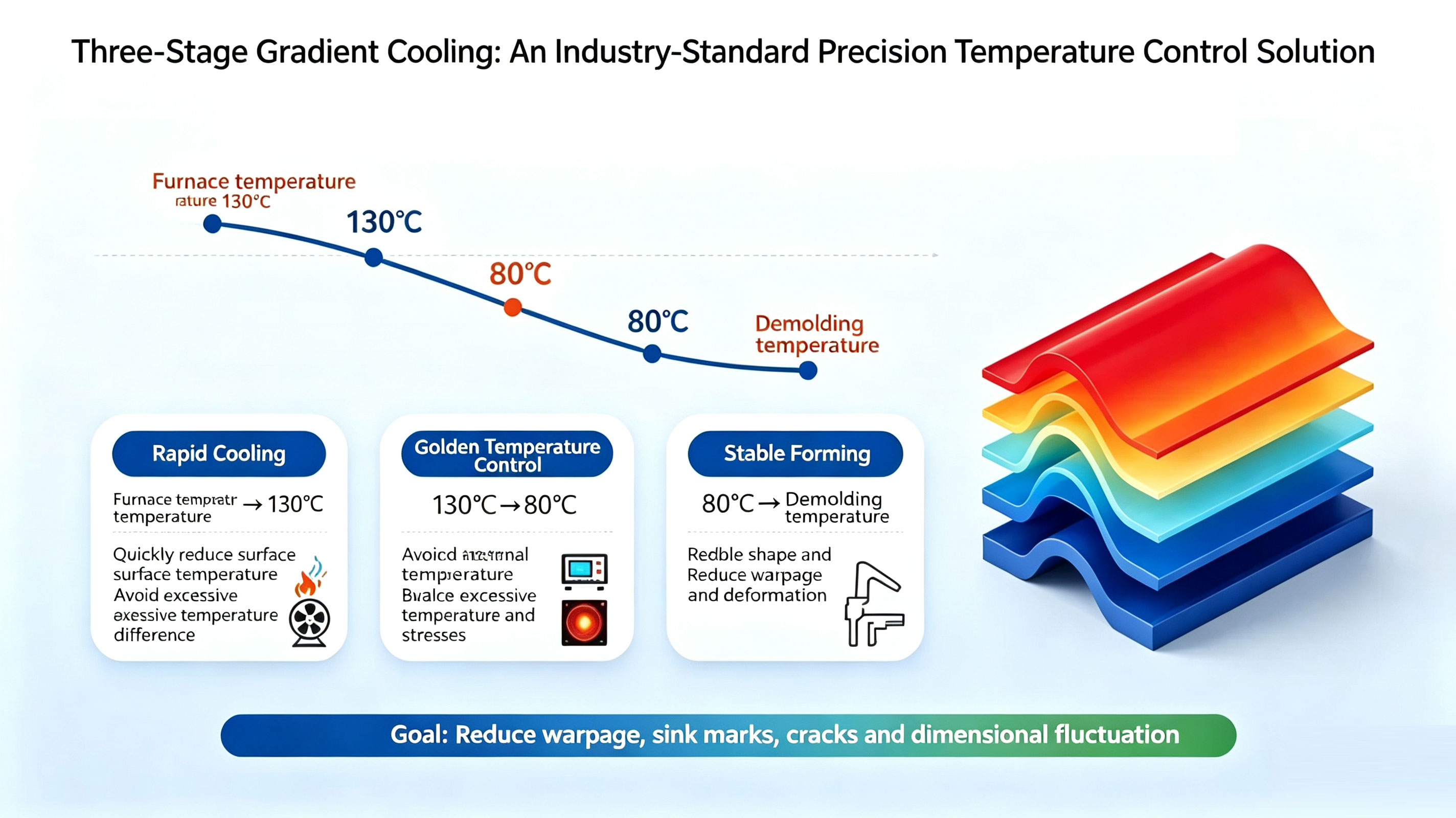
III. Three-Stage Gradient Cooling: The Industry-Standard Precision Temperature Control Approach
The traditional crude approach of "uniform cooling throughout" is highly prone to causing uneven stress, warpage, and insufficient toughness. The mature, standardized solution in the industry is the three-stage gradient cooling process, with precise temperature-zone control that balances production efficiency and product quality:
Stage 1: Rapid Cooling Zone (Oven Temperature → 130℃)
In this temperature range, the plastic melt has low viscosity and high plasticity, so rapid cooling will not generate residual internal stress. High-volume forced air or low-flow spray cooling can be used to effectively shorten the production cycle and increase throughput.
Stage 2: Precision Control Golden Zone (130℃ → 80℃; polyethylene crystallizes most actively in the 110-120℃ range)
This is the most critical temperature range in the rotomolding cooling process and the stage where polymer crystallization is most active. The cooling rate here directly determines the product’s crystalline structure, rigidity, toughness, and dimensional stability. If cooling is too fast, molecular chains cannot fully align, resulting in incomplete crystallization and insufficient rigidity. If cooling remains too slow, large spherulites tend to form, reducing the material’s impact resistance. In practice, the process should switch to a gentle cooling mode — reducing airflow, stopping intensive spraying, and stabilizing the cooling rate to ensure uniform, orderly crystallization.
Stage 3: Stable Shaping Cooling Zone (80℃ → Demoulding Temperature)
Below 80℃, the plastic has essentially completed solidification and crystallization, and no significant property changes occur. The core objective of this stage is to cool steadily to a safe demoulding temperature (below 70℃). Natural cooling or low-speed air cooling can be used. High-temperature demoulding must be strictly avoided to prevent stress release, product deformation, and dimensional deviation.
Practical Temperature Measurement Approach
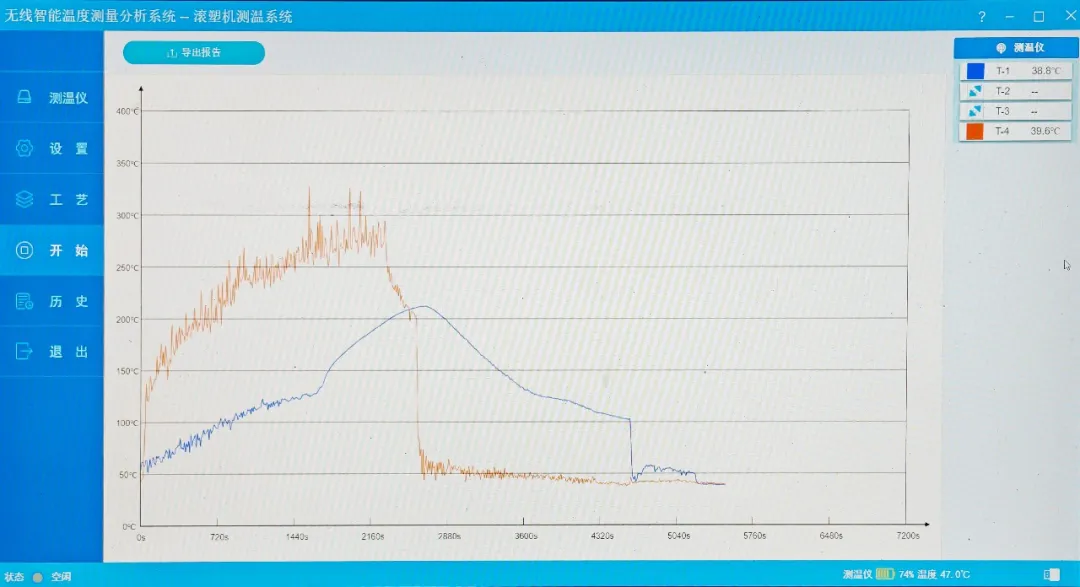
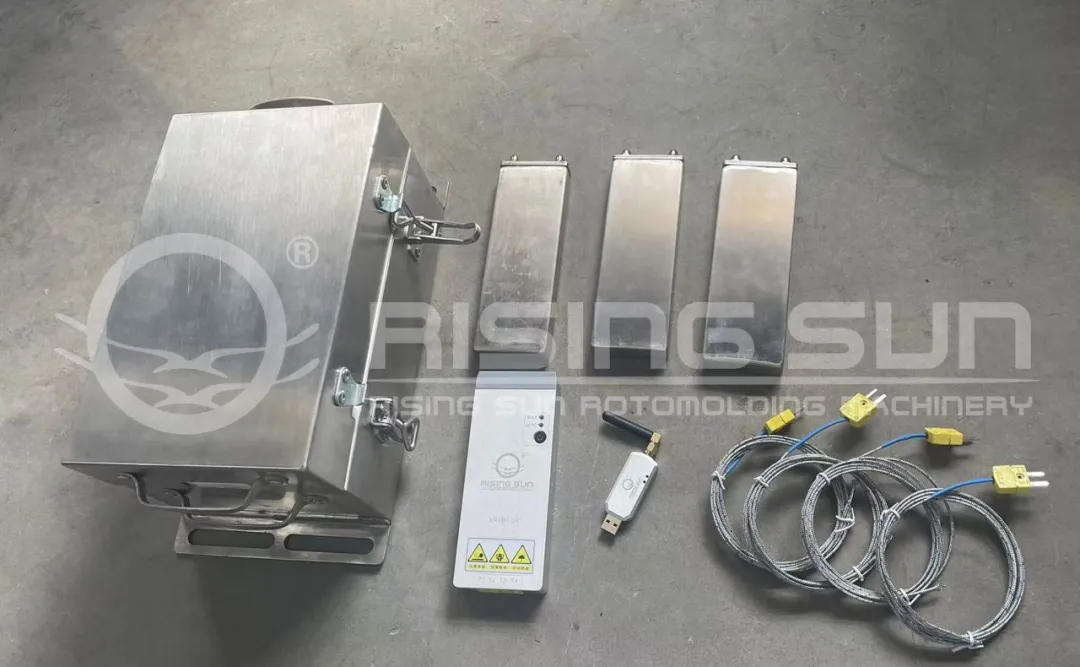
Mould rotation interferes with in-cavity sensor readings, and external wall temperature measurements suffer from thermal lag. The industry-standard field method is to install thermocouples symmetrically on the outer wall of the mould, pre-calibrate the inner-to-outer temperature differential data, and accurately infer the cavity temperature from the outer wall readings — enabling precise control of the cooling pace at each stage.
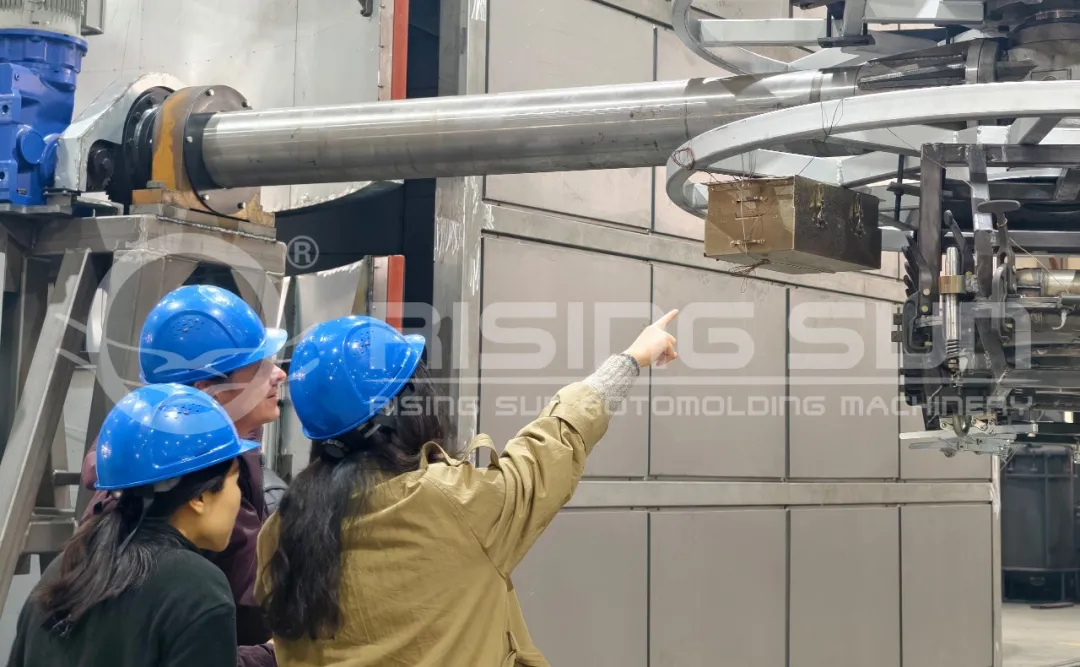
Rising Sun Rotomolding goes beyond conventional temperature measurement limitations with a self-developed in-mould precision temperature monitoring technology. This system directly collects real-time core molding temperatures from inside the mould cavity — no differential conversion needed, no data lag — accurately capturing the cooling pace across all temperature zones and truly reflecting the full temperature profile throughout the product’s cooling process.
IV. Process Integration: Aligning Cooling with Full-Process Parameters
The cooling process is not a standalone step. It must be deeply integrated with mould design, heating profiles, production environment, and demoulding standards — adjusted systematically to achieve stable mass production:
1. Mould Structure Adaptation (Upfront Planning): Complex moulds with thick walls, irregular shapes, and reinforcing ribs dissipate heat slowly. During the product design and mould development stages, cooling pathways must be planned in advance with adequate cooling margin reserved, to avoid structural temperature-differential defects during mass production.
2. Heating-Cooling Cycle Balance: The industry-optimal ratio of heating time to cooling time is 1:1.2–1:1.5. A slower cooling pace improves dimensional stability but reduces throughput; faster cooling boosts efficiency but risks sacrificing toughness and stability. The balance must be struck based on product precision and performance requirements.
3. Environmental Condition Adaptation: High temperature and high humidity in southern regions during summer reduce the heat exchange efficiency of spray cooling. Cooling time should be appropriately extended and spray intervals adjusted to avoid performance fluctuations caused by insufficient cooling.
4. Demoulding Temperature Red Line: Strictly enforce the below-70℃ demoulding standard. The higher the demoulding temperature, the more intense the stress release, and the risk of warpage and dimensional deviation increases exponentially. High-temperature forced demoulding is strictly prohibited.
Conclusion: Precision Cooling Control — The Core Foundation of High-Quality Rotomolding Production
The rotomolding industry has long held a misconception of overemphasizing heating while neglecting cooling. In reality, while heating ensures the part forms properly, it is the finely controlled cooling process that truly determines dimensional accuracy, mechanical performance, and structural stability — the very factor that separates superior products from mediocre ones. Moving away from experience-based rough cooling and adopting standardized, staged gradient temperature control is essential for improving quality, ensuring consistency, and reducing waste in rotomolding production.
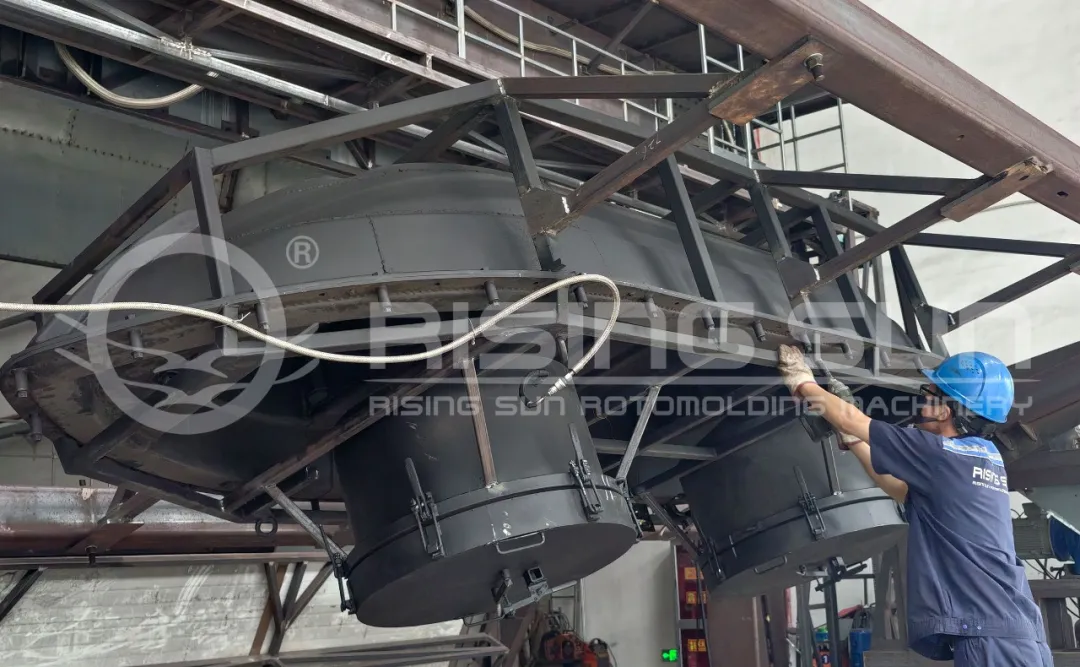
With over twenty years of expertise in rotomolding, Rising Sun Rotomolding has been deeply engaged in frontline mass-production process iteration, building a standardized gradient cooling management system adaptable to multiple product categories and working conditions. Leveraging staged temperature control and dynamic process tuning capabilities, we optimize cooling pace, balance the temperature field across the entire mould, and proactively prevent mass-production issues such as warpage, uneven toughness, and dimensional deviation at the source.
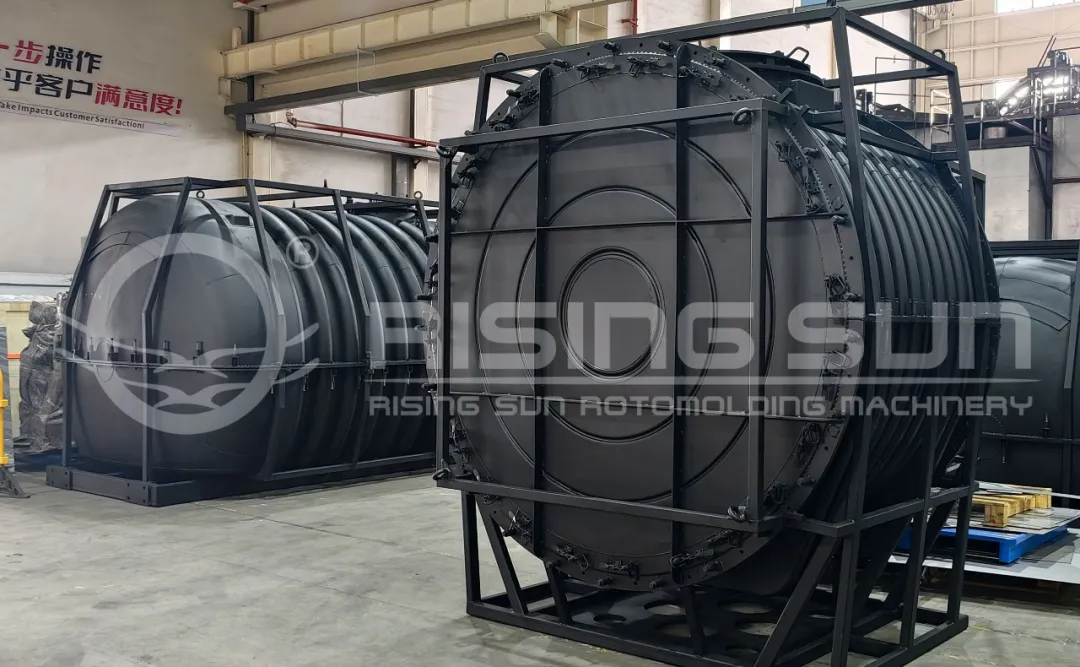
We accept commissions for process debugging, sample R&D, and batch customization of large, irregularly shaped, and high-precision rotomolded products, helping clients stabilize quality and reduce production losses.
Rising Sun Rotomolding continues to refine its precision manufacturing processes. Industry exchanges and discussions are welcome. Feel free to inquire about sample customization and factory site visits.
Email: info@risingsunroto.com
Website: www.risingsunroto.com




 浙公网安备 33108102000897号